
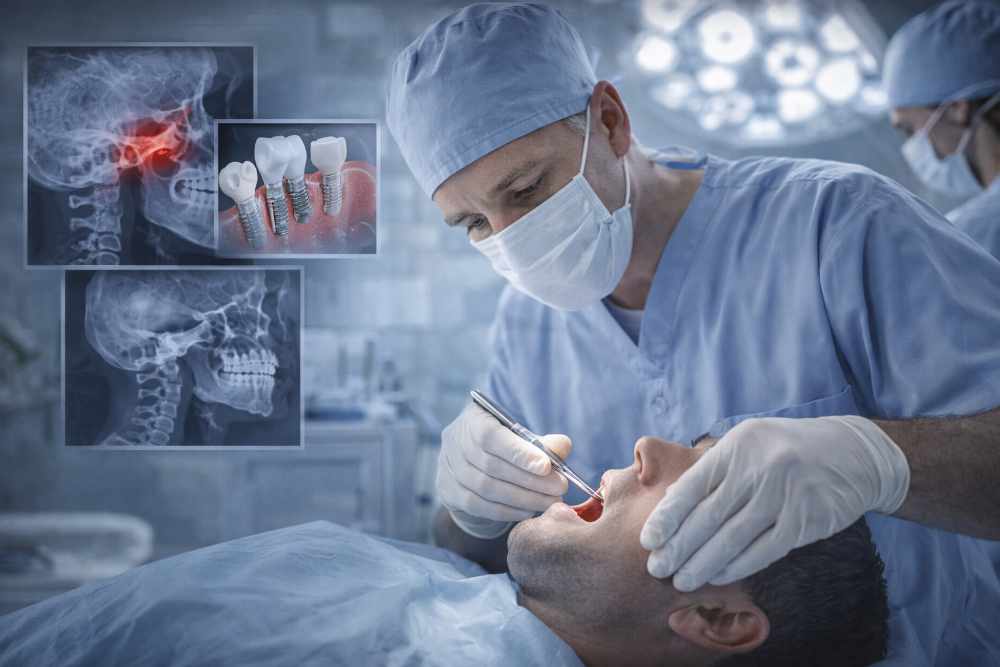
Oral and maxillofacial surgery are clinical specialties that bridge the gap between medicine and dentistry. They focus on the diagnosis and treatment of diseases, traumas and deformities affecting the soft tissues of the face, oral cavity and neck, the bony base of the facial skeleton, the dental structures of the jaw bones, the salivary glands, the temporomandibular joints and other structures of one of the most delicate areas of the human body - the face.
Oral and maxillofacial surgery specialists deal with a wide range of diseases that can affect both the soft tissues and bony structures in the head and neck. These conditions can be inflammatory, traumatic, oncological, congenital or acquired and often require a comprehensive diagnostic and therapeutic approach.
In more detail, the main lines of professional activity in this field include the analysis, diagnosis and treatment of diseases of the soft tissues and maxillofacial bony structures in the head and neck, in particular:
- Injuries of the face -bone fracture (fractures) of the facial skeleton and soft tissue injuries;
- Tumor formations -benign and malignant processes in the face, neck, oral cavity and jaws;
- Inflammatory diseases -infections of soft tissues, jaw and facial bones and surrounding structures;
- Diseases of the salivary glands -inflammatory processes, cysts, stones in the salivary glands and other pathological conditions;
- Diseases of the facial nerves -conditions affecting sensation and motor function of the face;
- Diseases of the temporomandibular joint -disturbances in joint function that can cause pain, restricted movement and functional problems;
- Congenital deformities and conditions -disorders of facial and jaw development occurring during intrauterine development and manifesting at birth or shortly thereafter;
- Acquired isolated or combined skeletal deformities of the jaw and facial bones, which are treated by orthognathic surgery;
- Reconstructive surgery of the face, oral cavity and neck -restoration of anatomical structures after trauma, tumors or other serious diseases;
- Dento-alveolar surgery -surgical procedures related to the teeth and alveolar structures of the jaw bones;
- Specific mucosal and bone pathology in the oral cavity -oral pathology, including various mucosal lesions, bone damage and jaw necrosis;
- Dental and facial implantology -restoration of missing teeth and facial structures by implant methods;
- Aesthetic facial surgery -surgical interventions aimed at improving the functional and aesthetic appearance of the face.
The practice of maxillofacial surgery often requires collaboration with other medical specialists - dentists/dental surgeons, orthodontists, ENT specialists, oncologists, plastic surgeons, neurosurgeons and other specialists, depending on the specific disease and the treatment approach required.
The development of modern diagnostic methods and surgical techniques allows more and more precise treatment planning and achieving of good functional and aesthetic results in patients with diseases in the maxillofacial region.
Author:
Bulgarian Association of Oral and Maxillofacial Surgery