
Congenital anomalies of the face and jaws represent disorders in the development of facial structures that arise during intrauterine development. They may affect the soft tissues of the face, the bones of the facial skeleton, the oral cavity, the palate, the nose or other structures of the face and neck.
The causes of these conditions may be genetic, related to external factors during pregnancy, or the result of a combination of hereditary and environmental factors.
Treatment often requires the involvement of a multidisciplinary team including:
- maxillofacial surgeons
- plastic surgeons
- orthodontists
- pediatricians
- ENT specialists
- speech and language therapists
Main types of congenital anomalies
Clefts of the lip and palate
There are cases in which babies are born with clefts of the lip, alveolar ridge or palate. These conditions are called congenital clefts in the maxillofacial region and are due to non-union of embryonic structures that make up the facial skeleton.
According to various studies in Bulgaria, the incidence of this deformity is approximately 1 per 1000 newborn children.
Genetic factors play an important role in the development of these conditions. Regions in different genes have been found to be associated with congenital clefts of the lip and palate - for example, 1q, 2p, 4p, 6p, 14q, 17q and 19q.
External factors during pregnancy can also have an impact, such as:
- Smoking
- alcohol use
- viral infections
- contact with toxic chemicals
- intake of certain medications
Among the drugs with possible teratogenic effect are indicated:
- retinoids (Accutane/Roaccutane)
- Phenytoin
- Methotrexate
- corticosteroids
- Benzodiazepines
A significant factor may also be lack of folic acid during pregnancy.
It is important to note that despite the visible facial deformity after birth, children with cleft lip and palate usually have completely normal mental and physical development. With proper treatment, many of these conditions can be successfully and fully corrected.
Forms of non-union defects
Clefts can affect:
- only the lip
- lip and alveolar ridge
- palate
- a combination of these structures
When the cleft affects only the lip, the problem is primarily aesthetic and is usually corrected surgically as early as the the first weeks after birth.
With cleft palate, there may be feeding difficulties in the early period. In these cases, parents are given feeding instructions or temporary obturation devices are used.
Operative treatment is usually performed in the second half of the first year of life.
In more complex cases, treatment may include:
- several surgical stages
- orthodontic treatment
- speech therapy
In some cases, consultation with ENT specialists due to disorders in the function of the Eustachian tube and recurrent infections is advised.
14 types of facial clefts
There are rare congenital defects in which non-growth of more extensive areas of the face occurs. These defects are called facial clefts (as opposed to the more common cleft lip and palate).
According to the classification of the French surgeon Paul Tessier are described 14 types of facial clefts, which are extremely complex in their structure.
These deformities are treated by specialized craniofacial teams, including:
- Neurosurgeons
- maxillofacial surgeons
- plastic surgeons
- ENT specialists
Modern surgical techniques allow significant improvement in function and appearance.
Congenital facial and cranial deformities
This group includes various diseases of genetic etiology in which underdevelopment or overdevelopment of parts of the face or skull is observed.
Craniosynostoses
Craniosynostoses are due to premature fusion of the skull sutures.
Among the most common forms are:
- trigonocephalus (triangular skull)
- scaphocephalus (elongated skull)
- brachycephalus (short skull)
- plagiocephalus (asymmetrical skull)
Hypoplasias of facial structures
These are states of underdevelopment of:
- upper jaw
- the cheek bone
- lower jaw
- ear structures
Syndromes such as:
- Franceschetti
- Treacher-Collins
- Goldenhar
Symmetrical facial deformities
More complex symmetrical deformities include syndromes such as:
- Crouzon
- Pfeiffer
- Carpenter
- Apert
Congenital cysts and fistulas of the face and neck
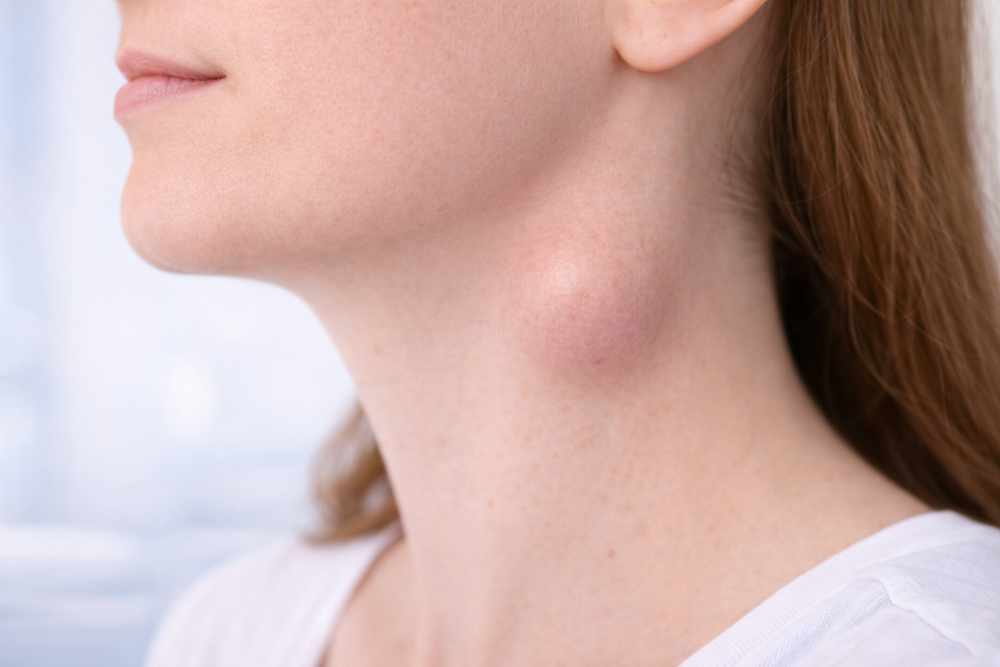
Congenital cysts and fistulas are remnants of embryonic structures that normally disappear during fetal development, but sometimes remain after birth.
Cysts manifest as lumps without skin disruption, while fistulas represent channels with skin opening, from which fluid may leak.
They are most often positioned:
- along the midline of the neck
- on the side of the neck
- around the ear area
- at the root of the nose or below the end of the eyebrows
Treatment is usually surgical, aiming at the complete removal of the formation to prevent recurrence.
Author:
Bulgarian Association of Oral and Maxillofacial Surgery