
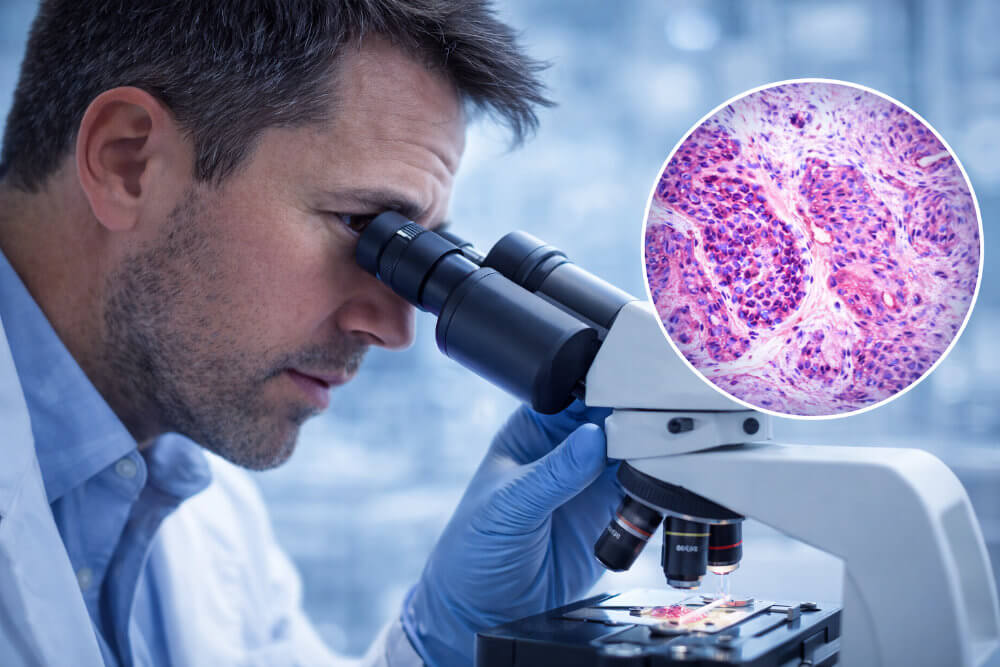
Diagnosis of maxillofacial tumors requires a comprehensive approach that includes clinical examination, imaging studies and histological analysis.
The purpose of the diagnostic process is to determine the exact nature of the mass and plan the most appropriate treatment.
Clinical examination
The first step in diagnosis is a detailed clinical examination performed by a specialist in oral or maxillofacial surgery.
At the time of examination, the following are assessed:
- the size and localization of the formation
- its consistency and depth
- the condition of the surrounding tissues and the relation of the mass to them
- the presence of pain or functional disorders
Imaging studies
Imaging methods play an important role in determining the spread of the tumor process.
Among the most commonly used studies are:
Radiography (X Ray)
Allows assessment of bone structures and the presence of pathological changes in the jaws.
Computed tomography (CT)
Provides detailed information about the spread of the tumor and its relationship to surrounding structures.
Cone-beam computed tomography (CBCT)
Often used to diagnose diseases of the jawbone, sinuses and teeth
Magnetic resonance imaging (MRI)
Allows detailed soft tissue assessment.
Biopsy
The profound method of making a definitive diagnosis is The biopsy.
It usually consist of taking a small tissue sample from the mass, which is examined microscopically by a pathologist.
Through this method we can determine:
- whether the mass is benign or malignant
- what type of cells it originates from
- the degree of aggressiveness of the tumour
Importance of early diagnosis
Early detection of tumor formations in the maxillofacial region significantly improves the prognosis and the chances of successful treatment.
Therefore, any change in the oral cavity or face that does not disappear within a few weeks should be evaluated by a specialist.
Author:
Bulgarian Association of Oral and Maxillofacial Surgery