
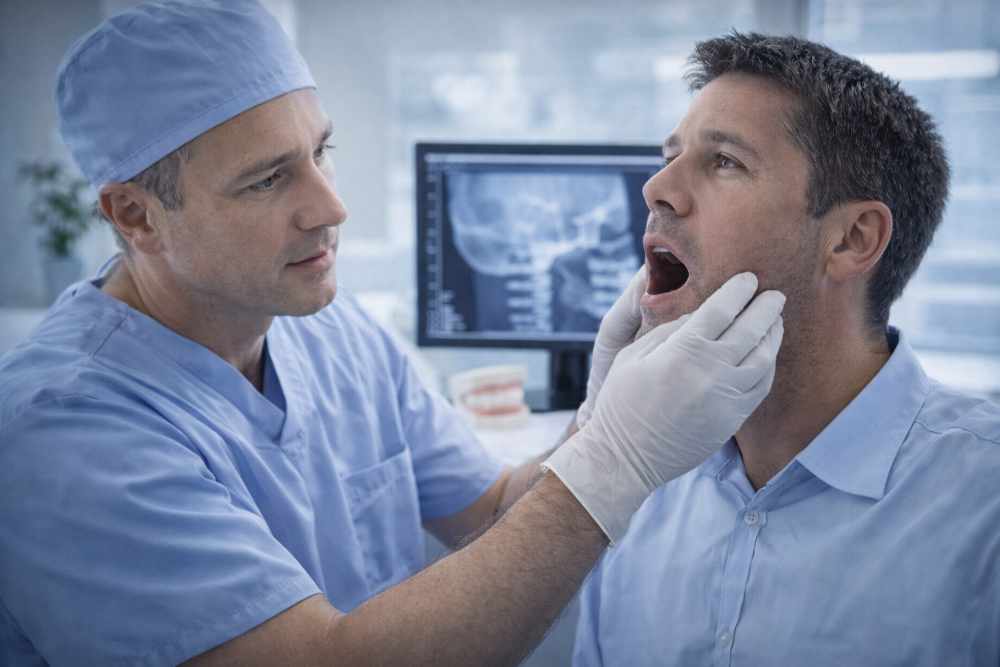
The examination by an oral or maxillofacial surgeon aims to identify the cause of the symptoms and determine the most appropriate diagnostic and treatment approach. It involves a detailed assessment of the condition of the face, oral cavity, jaws and adjacent structures.
Depending on the specific case, the review may involve several main stages.
Taking medical history
The first step is a conversation between the patient and the doctor, where information is gathered about:
- present complaints and symptoms
- the timing of their appearance and development
- concomitant or previous diseases and operations
- medication history (present and past)
- allergies to foods or medications
- social and work environment or individual habits
This information helps the specialist to shape and guide the diagnostic process and to assess the further investigations required.
Clinical examination
Clinical examination of the maxillofacial region follows. It may include:
- examination of the face, neck and oral cavity
- palpation of soft tissues and bony structures
- assessment of the condition of the teeth and jaws
- salivary gland examination
- assessment of temporomandibular joint function
- examination of the lymph nodes and other soft tissues in the neck.
During the examination, the specialist assesses the presence of deviations from the normal form or structure of tissues, the presence of specific formations or deformations and other specific features.
Ordering of additional tests
If necessary, additional imaging or laboratory tests may be ordered to assist in making an accurate diagnosis.
Among the most commonly used diagnostic imaging methods are:
- panoramic radiography - orthopantomography (OPG)
- cone-beam computed tomography (CBCT)
- standard computed tomography (CT)
- magnetic resonance imaging (MRI)
- ultrasound examination
👉 Detailed on topic: What tests are done before maxillofacial surgery
These examinations allow a detailed assessment of both bony structures and soft tissues in the maxillofacial region.
Determination of the treatment plan
After performing the examination and analyzing the available studies, the specialist determines the most appropriate treatment approach.
Depending on the condition, treatment may include:
- monitoring and tracking
- medication treatment
- surgical intervention
- referral to another specialist if necessary
- independent or interdisciplinary diagnostic and treatment approach
When an examination is needed
If you have symptoms such as jaw pain, swelling of the face, a non-healing wound in the oral cavity, a lump or a bump of any nature or difficulty moving the jaw, it is advisable to seek the advice of a specialist.
👉 Detailed on topic: When should we visit an oral or maxillofacial surgeon
Early diagnosis and proper treatment planning are essential for the successful treatment of most diseases in the maxillofacial region.
Author:
Bulgarian Association of Oral and Maxillofacial Surgery