
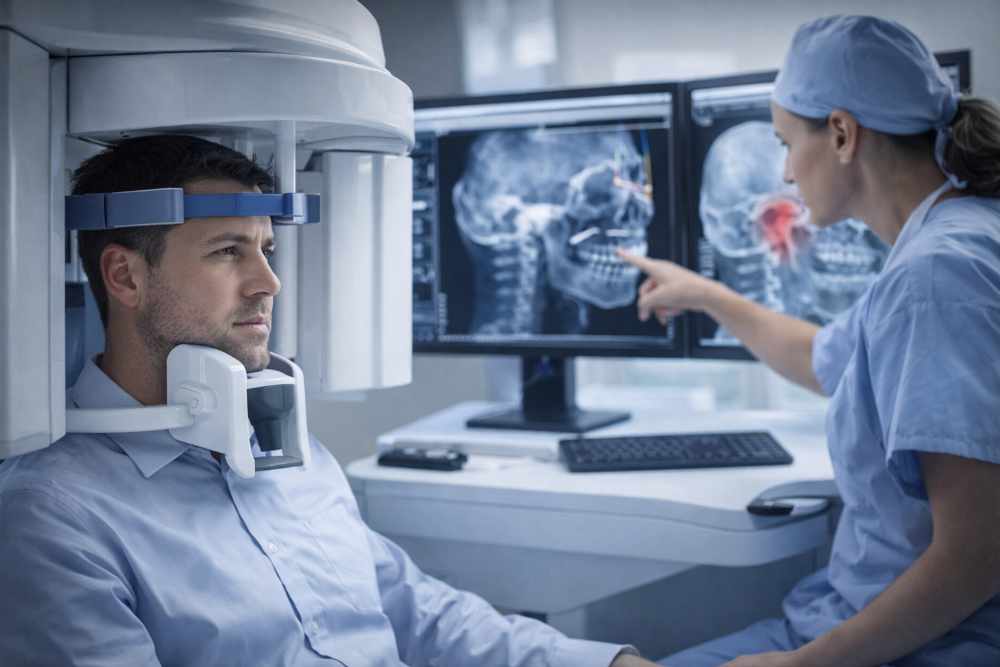
Before performing a surgical intervention in the facial, oral or maxillofacial area, it is necessary to make a comprehensive assessment of the patient's general condition. This allows the treating team to safely plan the surgical treatment and reduce the risk of complications.
Depending on the specific disease and type of surgery, various laboratory and imaging tests may be ordered.
👉 Detailed on topic: How does the consultation with a maxillofacial surgeon proceeds
Blood tests
Blood tests provide information about the general condition of the body and the functions of various organs and systems.
Among the most commonly prescribed tests are:
- complete blood count (CBC) - shows erythrocyte, leukocyte and platelet levels
- inflammatory indicators - to establish the presence of an inflammatory process
- blood sugar and indicators of glucose metabolism
- liver function tests
- renal function tests
- electrolyte balance и protein composition of blood
In some cases, specific indicators related to the condition of the bone tissue can also be examined, such as:
- vitamin D level
- thyroid и parathyroid hormone
- alkaline phosphatase and others
Imaging studies
Diagnostic imaging methods allow a detailed assessment of bone structures and soft tissues in the maxillofacial region.
The most commonly used studies include:
- panoramic radiography (OPG/OPT) on the jaws
- plain facial radiographs
- cone-beam computed tomography (CBCT)
- computed tomography (CT)
- magnetic resonance imaging (MRI)
- ultrasound examination
These methods allow an accurate determination of the localization and extent of the pathological process and support the planning of surgical intervention.
Additional consultations
In some cases, it may be necessary for the patient to undergo consultation with other medical specialists, especially in the presence of concomitant diseases.
Such consultations may include visits to:
- cardiologist
- endocrinologist
- neurologist
- anesthesiologist
- dentist or orthodontist
- ENT specialist
The purpose of these consultations is to assess the general health of the patient, the stability of concomitant diseases, the list and regimen of medications prescribed and to ensure maximum safety during surgery.
Preparation before surgery
Before the surgical procedure, the patient should follow the instructions of the attending physician and the operative team. These may include:
- taking or stopping of certain medications
- dietary restrictions before surgery
- conducting additional tests if necessary
👉 Detailed on topic: When should we visit a maxillofacial surgeon
Proper preoperative preparation and performing the necessary examinations are an important part of successful oral and maxillofacial surgery and safe patient recovery.
Author:
Bulgarian Association of Oral and Maxillofacial Surgery