
Tumor growths represent one of the most extensive and diverse groups of diseases in the maxillofacial region. They can affect the soft tissues of the face and oral cavity, the skin, jaw bones, salivary glands, and other structures in the head and neck area.
In the practice of oral and maxillofacial surgery, tumor processes require special attention, as timely diagnosis and proper treatment are essential for the prognosis and quality of life of the patient.
Depending on their biological characteristics, tumour formations are divided into two main groups -benign and malignant tumours.
Benign tumours
Benign tumours are growths that are characterised by a relatively preserved cellular structure similar to that of the normal tissues from which they originate.
They are distinguished by the following features:
- grow relatively slowly
- usually push the surrounding tissues without destroying them
- are often limited by a connective tissue capsule
- rarely spread to other parts of the body
Because of these characteristics, benign tumours usually have a more favourable prognosis, especially when diagnosed and treated early.
Among the more common benign tumor growths in the maxillofacial region are:
- lipomas
- fibromas
- papillomas
- adenomas of the salivary glands
- osteomas
An example of a benign tumor
As an example The lipoma -a benign tumor originating from adipose tissue. It usually presents as a soft, mobile mass located under the skin or in the soft tissues.
(benign tumor originating from the adipose tissue - lipoma, located in the left temple area)
Although these growths are not malignant, in certain circumstances they can cause functional or aesthetic problems, which is why surgical removal is often recommended.
Malignant tumors
Malignant tumors are distinguished by significantly more aggressive biological behavior. They are characterized by pronounced cellular atypism, which means that their cells differ significantly in structure and organisation from the normal tissues from which they originate.
The main characteristics of malignant tumors include:
- rapid and uncontrolled growth
- lack of a restraining capsule
- infiltration and destruction of surrounding tissues
- ability to spread to other parts of the body
This “spread” is carried out through a process known as metastasis, in which tumour cells are transmitted through the blood or lymphatic system and form secondary foci in other organs.
Among the malignant tumors that can develop in the maxillofacial region are:
- squamous cell carcinoma of the oral cavity
- malignant tumors of the salivary glands
- soft tissue sarcomas
- malignant tumours of the jaw bones
Early detection of these diseases is crucial for successful treatment.
Symptoms that may point to a tumor process
In the initial stages, some tumour growths may progress without pronounced symptoms. However, there are signs which direct towards consulting a specialist.
They include:
- the appearance of a denser bump, „lump“ or non-passing oedema in the facial or oral area
- a wound or ulcer that does not heal
- pain or discomfort in the maxillofacial region
- difficulty swallowing or speaking
- a change in the shape of the face or jaw
- numbness or loss of sensation in certain areas
In the presence of such symptoms, it is important to refer the patient to a specialist in oral and maxillofacial surgery for a clinical examination and the necessary tests.
👉 Details on the topic:
Early signs of tumors in the oral cavity
Diagnosis of tumor formations
The diagnostic process usually involves a combination of a clinical examination and further investigations.
The most commonly used diagnostic methods are:
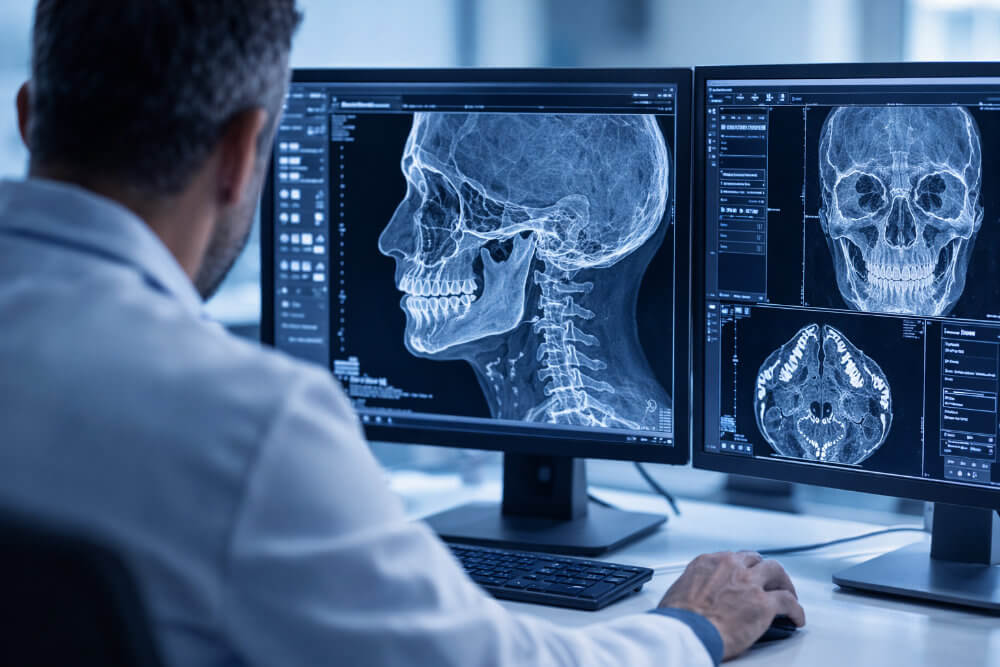
- imaging studies (X-ray, CT, MRI)
- ultrasound examination
- biopsy and histological examination
A biopsy is the removal of a small amount of tissue from the suspicious mass, which is examined under a microscope. This examination allows the exact nature of the tumour to be determined. In the case of clinical suspicion of a tumour process, biopsy should, if possible, be performed immediately after detailed imaging studies - CT or MRI - in order not to influence their interpretation with regard to the characteristics of the mass, its borders, depth of infiltration and involvement of adjacent structures.
👉Details on the topic:
How are tumor formations in the maxillofacial region diagnosed
Treatment
The treatment of maxillofacial tumours depends on:
- the type of tumour
- its size and localisation
- the stage of the disease
- the general condition of the patient
In many cases, the main method of treatment is the surgical removal of the tumour.
For malignant tumours, treatment may include additional therapeutic approaches such as:
- Radiotherapy
- chemotherapy
- immunotherapy
- combined (multimodal) treatment
In a number of cases, after the surgical stage is performed, a reconstructive procedures are carried out, which aim to restore both the function and the aesthetic appearance of the affected structures.
The importance of early diagnosis
Risk of malignant transformation
As with many other diseases, early diagnosis is a key factor in successful treatment of facial, oral and neck tumours.
In the maxillofacial region, there are also benign tumor formations that can undergo, under certain conditions malignant transformation (malignization). This means that over time the cells of these growths can undergo changes and become malignant tumours. Typical examples exist in the area of the salivary glands or jawbones. For this reason, timely diagnosis and follow-up of such growths are essential to prevent complications and to carry out adequate treatment.
Regular preventive check-ups with a dentist and timely consultation with a specialist when unusual symptoms appear can significantly increase the chances of early detection and successful treatment.
Related Information:
👉 The most common questions about oral and maxillofacial surgery
Author:
Bulgarian Association of Oral and Maxillofacial Surgery