
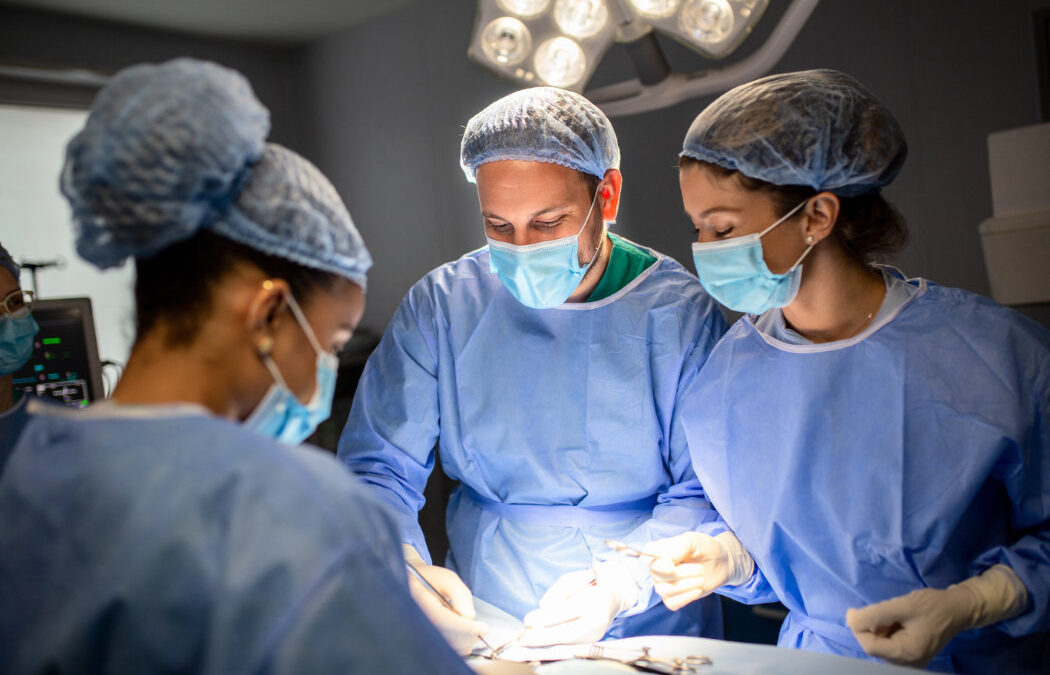
Oral surgery is a dental-medical and maxillofacial surgery a medical specialty bringing together knowledge and practice in the diagnosis and treatment of diseases, injuries and deformities affecting the face, the external part of the head, the oral cavity, the jaws and the structures of the neck outside the spine.
Specialists in this field deal with a wide range of diseases - from inflammatory processes and cysts of the jaws, through salivary gland diseases and tumor formations, to complex trauma of the facial structures, congenital anomalies of the face and jaws, as well as reconstructive surgery.
To this group of diseases also refer skin tumors growths in the facial area, that can infiltrate deeper tissues. An example of such a process is skin cancer in the nose lip or eyelid area, which, when advanced, may involve underlying structures and require complex surgical treatment.
This page summarizes the most frequently asked questions from patients seeking information about diseases of the maxillofacial region, the necessary examinations and the treatment options.
When should we see a maxillofacial or oral surgeon?
- Whenever we have a non-healing sore or larger wound on the face, mouth, nose, neck, or other visible or deep areas that have not healed for more than 2 weeks and is changing in shape, size, color, or other characteristics.
- Whenever we have a bump on the face, mouth or neck, whether it is painful or not.
- When we have a congenital or acquired deformity of the face, teeth, jaws, lips, ears, tongue, palate or throat
- When different areas of the face that accommodated changes over a prolonged period of time begin to change in shape, size, color or other characteristics.
- When your personal medical or dental doctor could not manage a certain problem in the facial or oral area on his/her own and referred you for a consultation with a surgeon.
What does a maxillofacial surgeon treat?
The maxillofacial surgeon diagnoses and treats diseases and injuries that affect the soft tissues of the face and oral cavity, the bones of the facial skeleton, the jaws, the salivary glands, the temporomandibular joints, and the facial nerves.
In their practice these specialists deal with both inflammatory and infectious diseases, both with tumor growths and trauma, congenital deformities and reconstructive surgical procedures, and etc..
👉 Detailed on topic: What is oral and maxillofacial surgery
When should we consult a specialist?
Consultation with a maxillofacial surgeon is recommended in the presence of symptoms such as:
- non-healing wound in the facial and oral area
- pain in the jaw or face
- swelling of the face or oral cavity
- difficulty opening the mouth
- tingling of the lip, chin or other parts of the face
- difficulty in moving any part of the face, including the eyes
- facial trauma
- suspicion of cysts or tumour growths
Early diagnosis is essential for the successful treatment of many diseases in this area.
👉 Detailed on topic: When should we visit a maxillofacial surgeon
How the examination at oral or maxillofacial surgery is performed?
The initial examination includes a detailed medical history, clinical examination of the maxillofacial region and, if necessary, the ordering of additional imaging and laboratory tests.
Among the most commonly used diagnostic imaging methods are:
- panoramic radiographs and plain facial radiographs
- cone-beam computed tomography (CBCT)
- standard computed tomography (CT)
- magnetic resonance imaging (MRI)
- ultrasound / ultrasound diagnostics - (ultrasound)
These examinations allow detailed assessment of both bony structures and soft tissues, and play an important role in the diagnosis of inflammatory processes, cysts, traumatic injuries and tumor growths.
👉 Detailed on topic: How does the consultation with a maxillofacial surgeon proceeds
Symptoms that require attention
Why might jaw pain occur?
Jaw pain can be caused by a variety of conditions, including:
- inflammatory processes around the teeth
- diseases of the temporomandibular joint
- cysts or tumour growths
- jaw injuries
- soft tissue infections
Determining the exact cause requires clinical examination and imaging.
👉 Detailed on topic: Pain in the jaw - possible causes
Is popping in the jaw dangerous?
Popping or clicking in the temporomandibular joint is often associated with disturbances in the temporomandibular joint function.
In many cases, these symptoms are harmless, but they are accompanied by pain, limited motion or discomfort when chewing, it is advisable to consult a specialist.
👉 Detailed on topic: Diseases of the temporomandibular joint
When is facial swelling an alarming symptom?
Swelling of the face can be a result of:
- infection of tooth or surrounding tissues
- inflammation of the salivary glands
- trauma
- cysts or tumour growths
In cases of rapidly increasing swelling, severe pain or fever, a timely medical examination is necessary.
👉 Detailed on topic: Swelling of the face - possible causes
Wisdom teeth
When does a wisdom tooth need to be taken out?
Surgical removal of wisdom teeth may be necessary in:
- retained teeth
- inflammation around the tooth
- pain and swelling
- damage to adjacent teeth
- formation of cysts and other pathological changes
- by indication in the course an orthodontic treatment
The decision for surgical treatment is made after clinical examination and imaging and is not mandatory in all cases of uneruptured wisdom teeth.
👉 Detailed on topic: Wise man's cane - when it is necessary
How long does recovery after wisdom tooth surgery last?
The recovery period usually lasts a few days to a week. During this period, the following may be observed:
- soft tissue swelling in different volumes
- pain
- restricted mouth opening
- difficulty eating
Compliance with the treating surgeon's postoperative recommendations is important for a prompt recovery.
👉 Detailed on topic: Recovery after wisdom teeth surgery and wound and mouth care
Diseases of the jaws
When do congenital anomalies occur in the maxillofacial region?
Congenital craniofacial anomalies are disorders of facial, jaw or oral development that occur during the intrauterine development.
Among the most common conditions are:
- cleft lip (so-called „rabbit lip“)
- cleft palate
- congenital deformities of the jaws
- asymmetries of the facial skeleton
Treatment of these conditions often requires combined approach, including maxillofacial surgeons, orthodontists, pediatricians, ENT specialists, plastic surgeons, speech therapists and other specialists. In many cases, surgical treatment allows a significant improvement in the functions of eating, speaking and breathing, as well as in the aesthetic appearance of the face.
👉 Detail on topic.born anomalies of the face and jaws
Cyst of the jaw
What is a jaw cyst?
A jaw cyst is a pathological cavity filled with fluid or crystal mass that develops in the jaw bone, around the teeth, or in the soft tissues of the face and neck.
In many cases, cysts are asymptomatic and are simply detected on X-ray or other imaging. At larger sizes they can cause swelling, pain and destruction of the bone structure.
👉 Detailed on topic: Cysts of the jaw - symptoms and treatment
What are the early signs of an oral tumor?
Among the possible symptoms are:
- lump or swelling in the oral cavity
- a wound that does not heal
- change in mucous membrane colour
- pain or difficulty swallowing
With such symptoms, a timely examination by a specialist is necessary.
👉 Detailed on topic: Tumors in the oral cavity
Preparation for surgical treatment
What tests are done before maxillofacial surgery?
If you are going to undergo surgery in the mouth or face, follow strictly the preparation instructions assigned by the treating team.
These could include:
- Blood tests to determine both general blood parameters - PCK (with a link to a characteristic), specific organs and systems - liver parameters, kidney parameters, blood sugar level and metabolism, markers of inflammation, protein and electrolyte composition of the blood, etc., as well as bone structure-specific parameters - Vitamin D level, parathyroid hormone level, alkaline phosphatase level, etc.
- Consultations with other medical professionals in connection to the detection or control of concomitant diseases or dentists (dentists) in connection to the preparation of some of the teeth related to the treatment.
- Imaging studies including:
- panoramic and other facial radiographs
- computed tomography (CT), ultrasonography, or magnetic resonance imaging (MRI)
- chest radiography
These examinations allow the surgeon to assess the patient's condition and plan treatment.
👉 Detailed on topic: Examinations before maxillofacial surgery
When it is necessary to seek medical help
Regardless of the cause of the symptoms, it is advisable to seek medical or dental advice when there is:
- severe or prolonged pain in the maxillofacial region
- rapidly increasing swelling
- facial trauma
- difficulty opening the mouth
- numbness or loss of sensation
Timely diagnosis and treatment are key to preventing complications and achieving optimal therapeutic outcome.
Be aware about risk factors, such as:
- Smoking
- Use of alcohol
- Impaired oral hygiene
- Use of opiates and energy drinks
Author:
Bulgarian Association of Oral and Maxillofacial Surgery